Few ideas have shaped human life as deeply as our understanding of right and wrong and our beliefs about karma. For centuries, religions, cultures, and societies have used these concepts to guide human behavior and create moral frameworks. Most of us grow up believing that good actions lead to positive outcomes, harmful actions create suffering, and every choice eventually comes back to us in some form. But what if there is a deeper way of looking at these ideas? What if karma is not simply a system of reward and punishment, but part of something much greater?
When we begin to explore these questions, an interesting observation emerges. Throughout history, ideas about right and wrong have changed across cultures, societies, and time periods. What is considered acceptable in one place may be considered inappropriate somewhere else. Practices that were once condemned may later become accepted, while beliefs that were once celebrated may eventually be questioned. If right and wrong were absolute and universal in the same way that gravity or the movement of the planets are universal, their definitions would never change. Yet human interpretations continue to evolve. This suggests that our ideas of morality may not be ultimate truths, but rather frameworks that help consciousness navigate experience at a particular stage of development.
At the level of ordinary human awareness, life is experienced through duality. There is self and other, success and failure, light and darkness, good and bad. The world appears divided into opposites, and within that experience, moral structures become necessary. Societies need boundaries. Communities need values. Individuals need guidance. In this context, ideas about right and wrong serve an important purpose. They help create order and encourage growth. However, something can be useful without being absolute. Just as a child learning to ride a bicycle may need training wheels for a period of time, humanity may also rely on certain concepts until a deeper understanding begins to emerge.
From the perspective of the Higher Self, an even deeper question arises. If the same consciousness is expressing itself through every living being, then who is truly good and who is truly bad? We often spend our lives placing people into categories. Some are seen as righteous, others as flawed. Some are viewed as enlightened, others as lost. Yet from a higher perspective, every individual is acting from their current level of awareness. Just as a child and an adult do not possess the same understanding of life, different levels of consciousness naturally lead to different choices and behaviors. This does not mean that all actions are equal, but it does invite us to look beyond labels and consider the awareness from which those actions arise.
This brings us to karma. One of the most common misunderstandings about karma is the belief that it functions as a cosmic punishment system. Many people imagine an invisible force somewhere in the universe keeping track of every thought, emotion, and action, carefully assigning rewards and penalties. But if consciousness itself is the one having the experience, if the Higher Self and the individual are not ultimately separate, then why would consciousness seek to punish itself? Why would it create experiences for growth and learning only to condemn itself for participating in them?
Many spiritual traditions offer a different perspective. They describe karma not as punishment, but as a natural law of cause and effect. At an even deeper level, karma can be understood as a process of learning. Life is not trying to punish us. Life is trying to teach us. Every experience carries within it the possibility of greater awareness.
Imagine someone who constantly seeks validation from others and bases their self-worth on external approval. Life may repeatedly place that person in situations where they experience rejection or disappointment. From the surface, this may seem unfair. But from a deeper perspective, those experiences may be inviting that individual to discover their worth from within. Similarly, a person who tries to control every aspect of life may eventually encounter circumstances where control becomes impossible. Not because life wishes to break them, but because life is offering an opportunity to develop trust, acceptance, and inner strength.
This may explain why so many people look back on their most difficult experiences and eventually recognize them as some of their greatest teachers. The challenges that once felt unbearable often become the experiences that lead to the deepest wisdom. The failures that seemed devastating at the time sometimes become the very events that redirect a person toward a more authentic path. While suffering rarely makes sense in the moment, a broader perspective often reveals that growth was taking place beneath the surface.
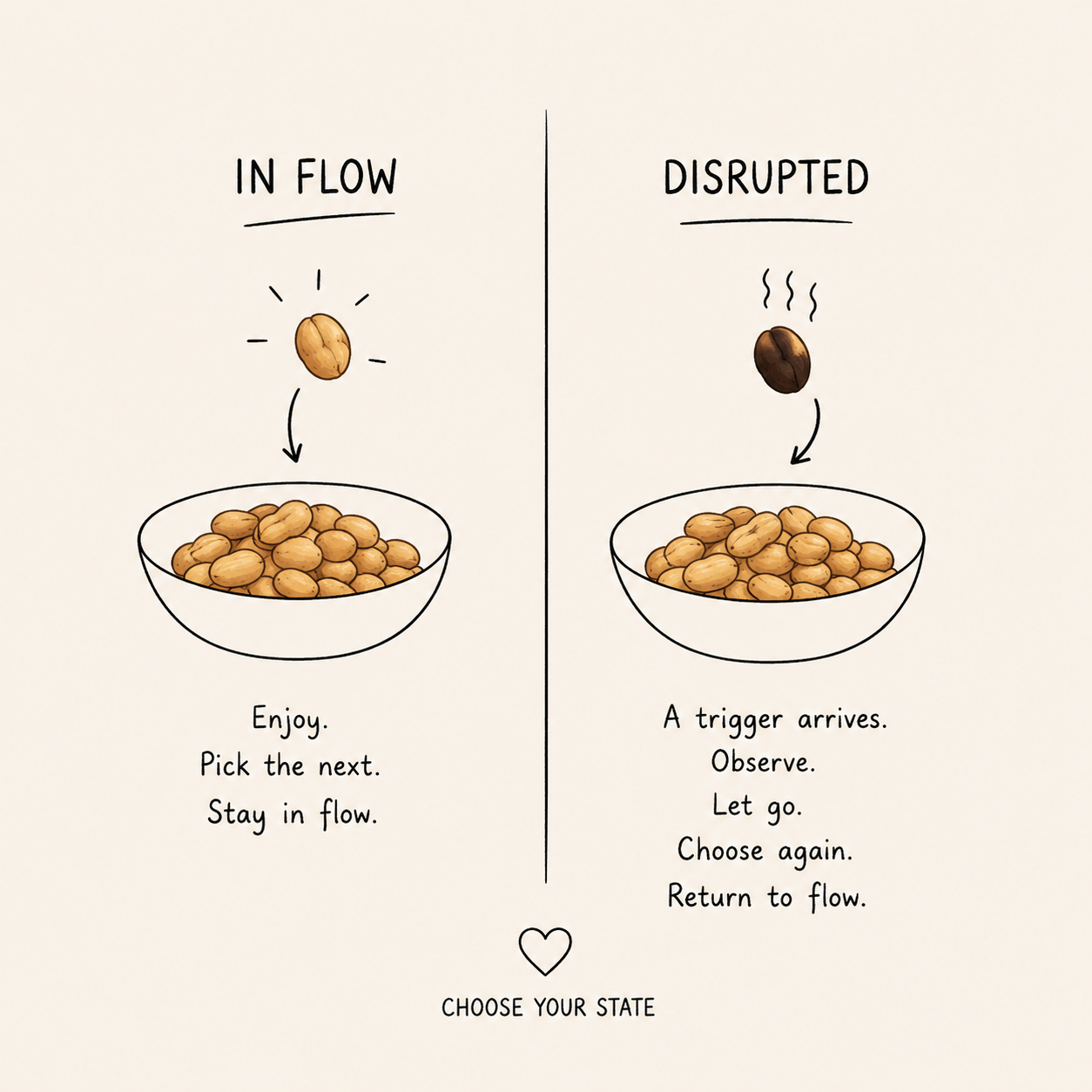
People often ask who keeps track of karma. Yet perhaps the question itself is based on a misunderstanding. Karma may not require an external authority. Gravity does not need someone to enforce it. Fire does not need permission to burn. In the same way, karma may simply be woven into the fabric of existence itself. When a stone is dropped into still water, ripples naturally spread outward. No one has to command them to appear. Likewise, every thought, emotion, intention, and action creates ripples within consciousness. Over time, those ripples return as experiences. This is not revenge. It is not judgment. It is not punishment. It is simply the natural movement of life seeking balance, understanding, and growth.
As consciousness evolves, our relationship with these ideas begins to change. In the beginning, a person may ask, “Is this right or wrong?” As awareness deepens, the question often becomes, “What is the most conscious choice I can make?” Eventually, an even deeper question emerges: “Does this action expand consciousness, or does it create greater separation and limitation?” This shift transforms everything. Fear gradually gives way to understanding. Ethical behavior no longer arises from the desire to avoid punishment, but from a genuine recognition of our interconnectedness.
This is why truly awakened teachers rarely rely on fear to inspire change. Fear may influence behavior for a short time, but awareness transforms a person from within. Fear says, “Do not do this or something bad will happen.” Awareness says, “Understand the deeper truth, because you are not separate from anyone or anything.” Fear encourages obedience. Awareness encourages wisdom.
As this understanding deepens, ideas about karma, morality, responsibility, and personal growth begin to take on a new meaning. Life no longer appears to be a courtroom where rewards and punishments are handed out. Instead, it begins to look more like a classroom, a place where consciousness learns about itself through experience. Every challenge, every relationship, every success, and every setback becomes part of a larger journey of awakening.
Perhaps this is the deepest insight karma has to offer. Life is not here to punish us. Life is here to help us remember who we truly are. Through every experience, consciousness is expanding, learning, and awakening to itself. And the more we understand this, the more we begin to see that the purpose of life is not judgment, but growth; not fear, but awareness; not punishment, but awakening.