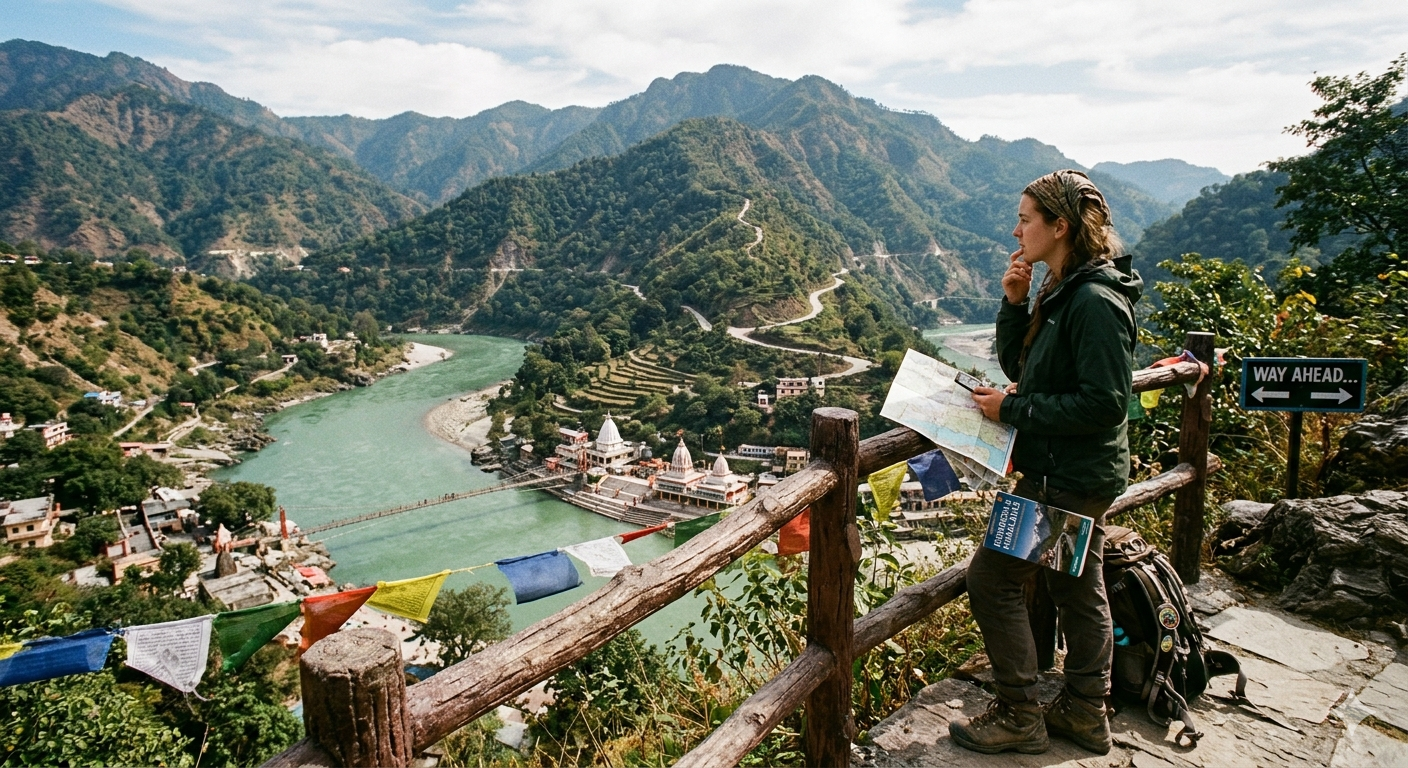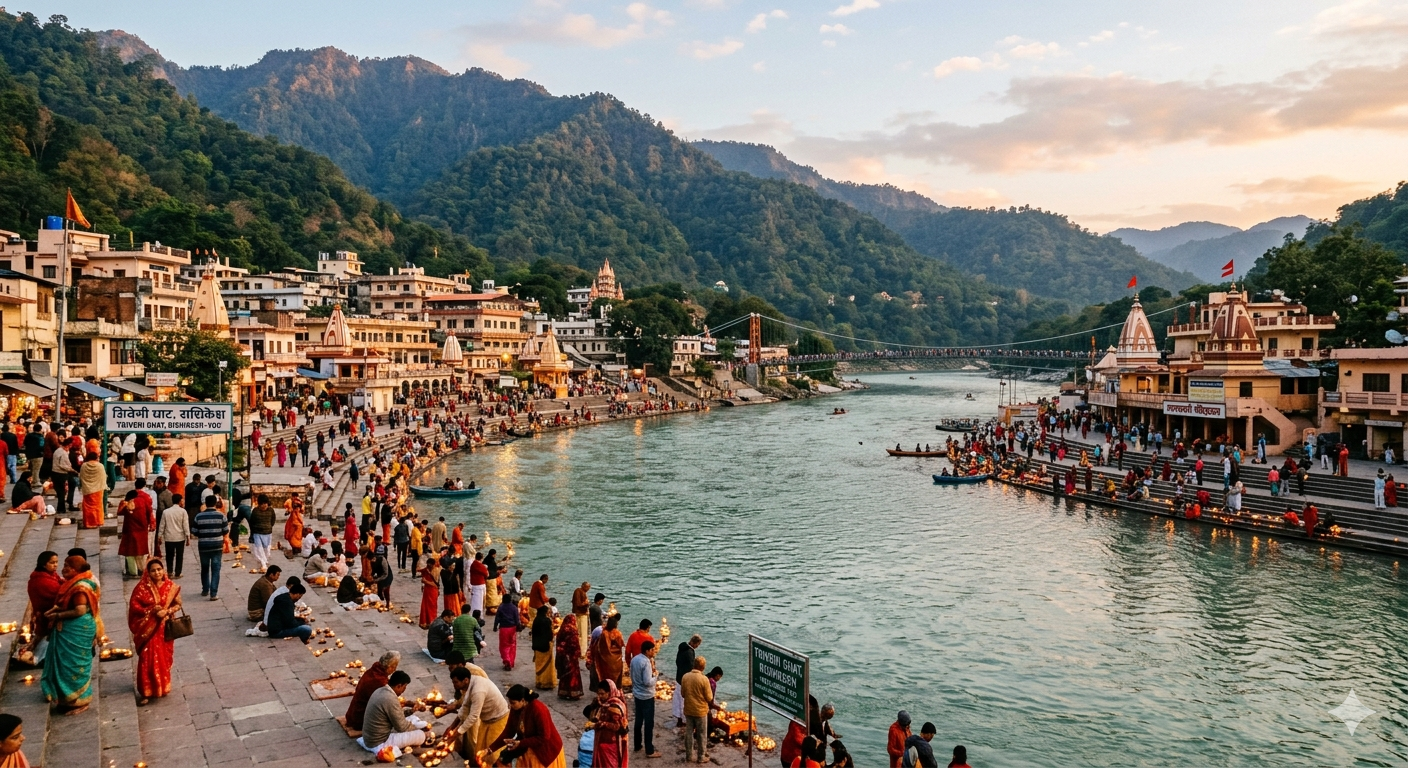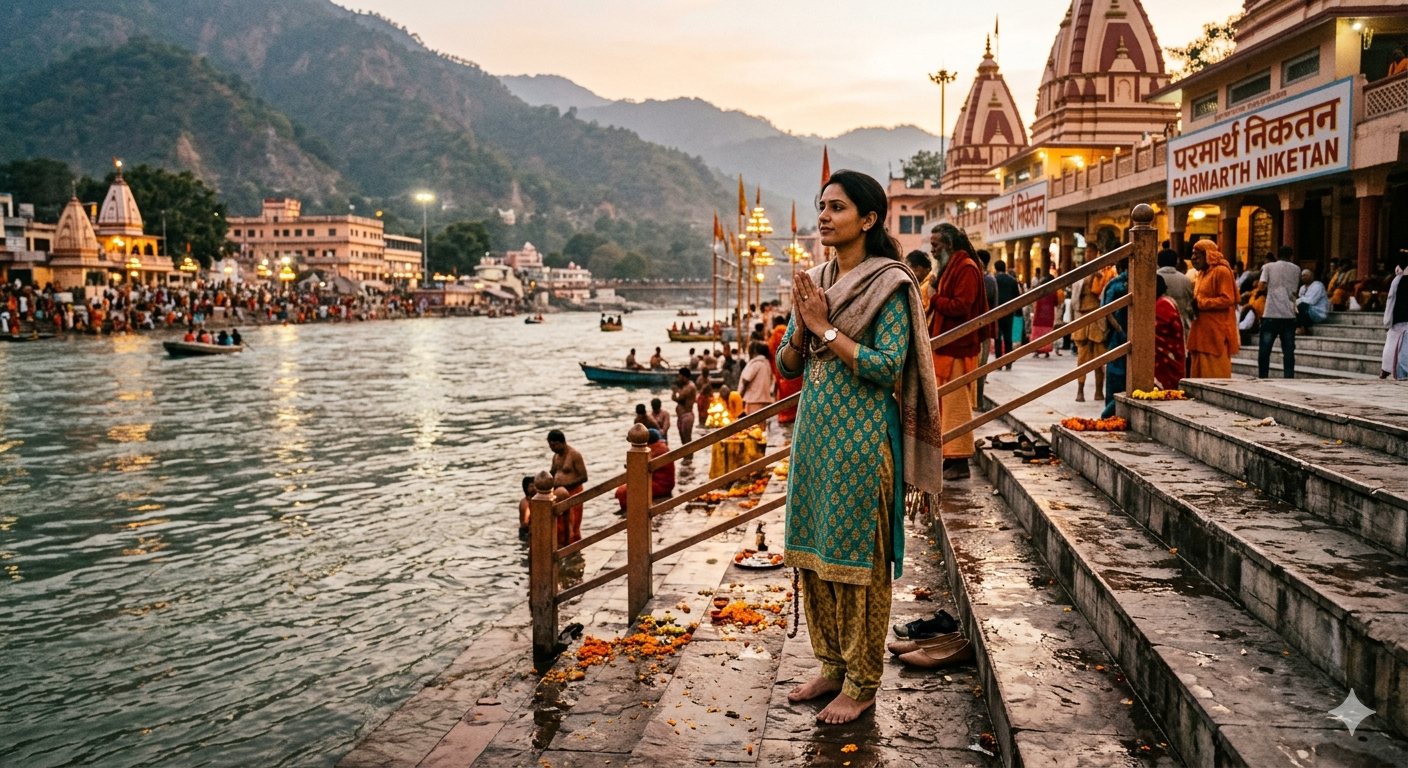
If you grew up outside India in an Indian household, you probably know this feeling: bits and pieces of tradition passed down — a festival here, a phrase there, a grandparent's half-remembered story — but never quite the whole picture. For a growing number of NRIs and second-generation Indians, Rishikesh has become the place where those fragments start to make sense.
Why Rishikesh Specifically
When someone raised abroad decides to explore their roots more seriously, the trail very often leads back to India's spiritual heartland — Rishikesh among the most prominent of these places. It isn't just historically significant; it's a living, active spiritual community today, not a museum of the past. That distinction matters for anyone who grew up with secondhand stories rather than firsthand experience.
For many NRIs, this trip isn't really about religion in a strict sense. It's about identity — closing a gap between where you were raised and where your family's story actually begins. That gap can feel surprisingly large, even for people who feel settled and confident in their adopted country.
What Makes This Different From a Regular Trip Home
Beyond the Family Visit
Most India trips for NRIs revolve around relatives. A retreat adds a dimension that's entirely your own.
No Language Barrier
Sessions are typically conducted in English, so fluency in Hindi isn't a requirement to participate fully.
Guided, Not Just Sightseeing
A structured retreat goes deeper than visiting temples as a tourist — it engages with the philosophy directly.
A Community of Similar Backgrounds
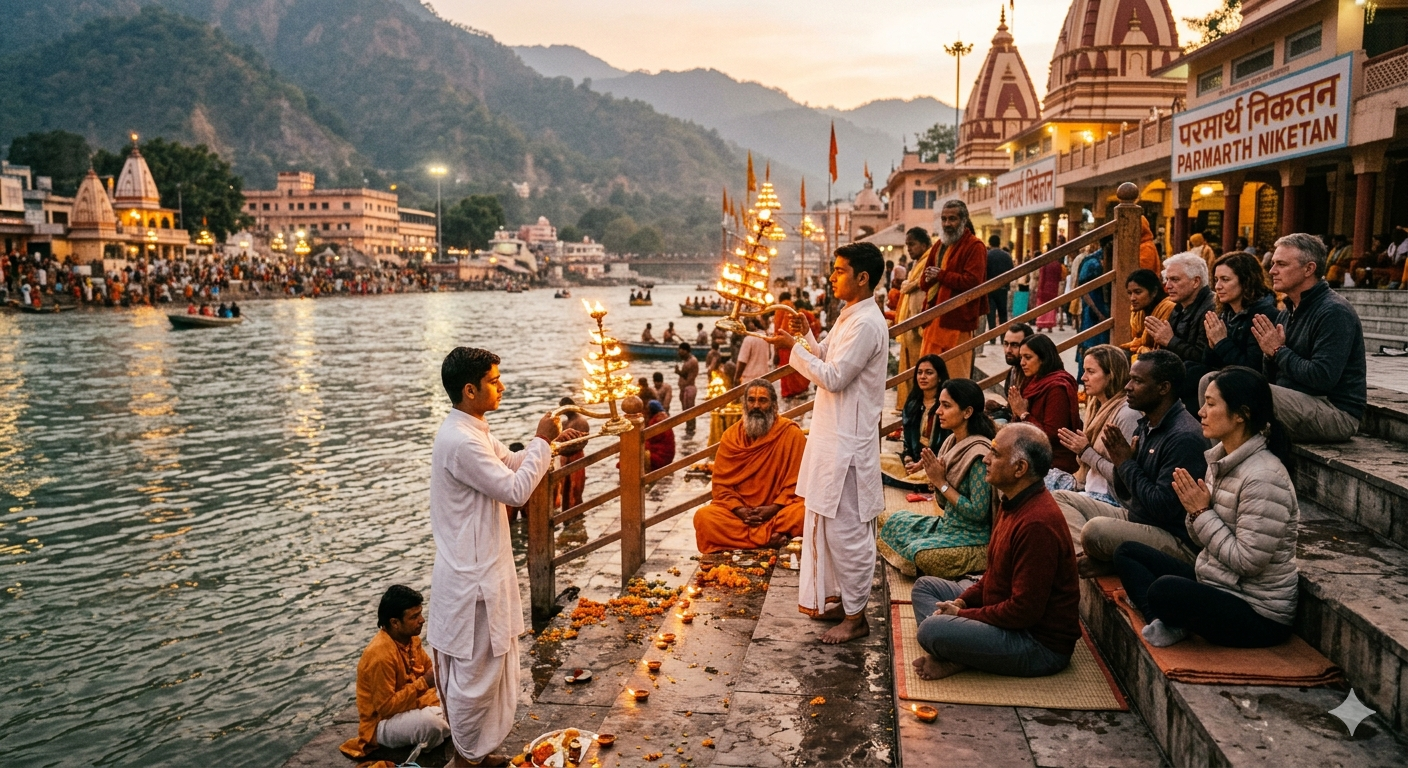
Many retreats include other diaspora attendees navigating the exact same in-between feeling.
What to Tell Family Back Home
Sometimes the hardest part isn't the trip itself, but explaining it to relatives who might see a "spiritual retreat" as a strange way to spend limited vacation time in India. In practice, framing it simply as wanting to understand the spiritual side of your heritage more deeply, alongside visiting family, tends to land well — because that's exactly what it is.
A Global Community, Rooted in India
The Great Awakening, founded by Praveen Bhatiya in 2022 and guided by his mentor Izumi Sammer, has grown into a community spanning more than fifteen countries, with nearly 5,000 members — a meaningful number of them part of the Indian diaspora, returning to Rishikesh to explore exactly this kind of connection.
If this will be your very first retreat experience of any kind, our general beginner's guide to Rishikesh covers logistics and what to expect from day one.
Reconnect With What Was Always Yours
The Great Awakening welcomes NRIs and diaspora visitors into its Rishikesh retreats, conducted in English and guided personally by Izumi Sammer.
Frequently Asked Questions
Do I need to know Hindi or speak it fluently to attend a retreat in Rishikesh?
No. Most retreats, including those run by The Great Awakening, conduct sessions in English, or with English available, making them accessible to NRIs and second-generation Indians who may not be fluent in Hindi.
Is a Rishikesh retreat a good way to reconnect with Indian culture as an NRI?
Many NRIs find that a guided spiritual retreat offers a deeper, more meaningful connection to Indian heritage than a typical tourist visit, since it engages directly with the philosophical and spiritual traditions rather than just sightseeing.
Can I combine a Rishikesh retreat with visiting family elsewhere in India?
Yes, this is a common approach. Many NRIs plan their retreat as part of a longer India trip that also includes visiting family or other regions.