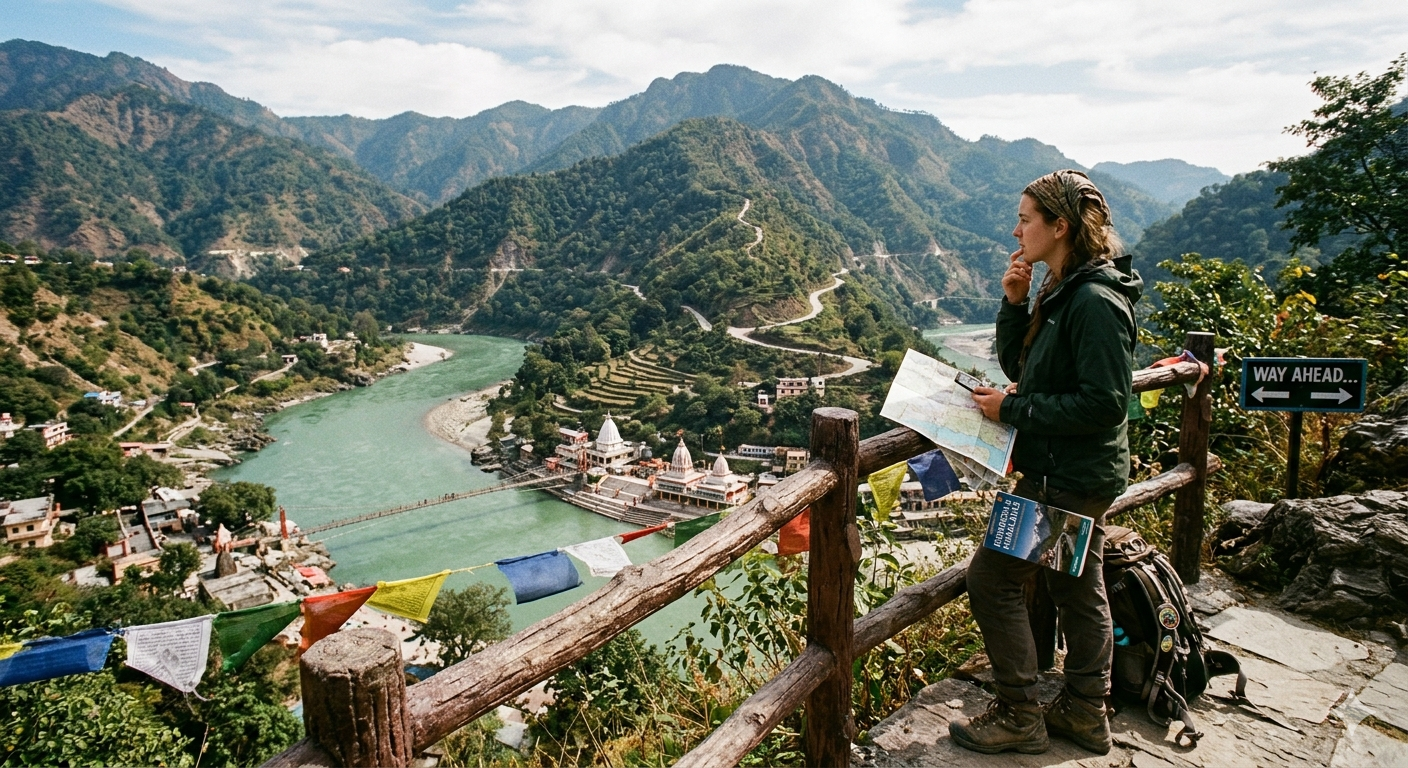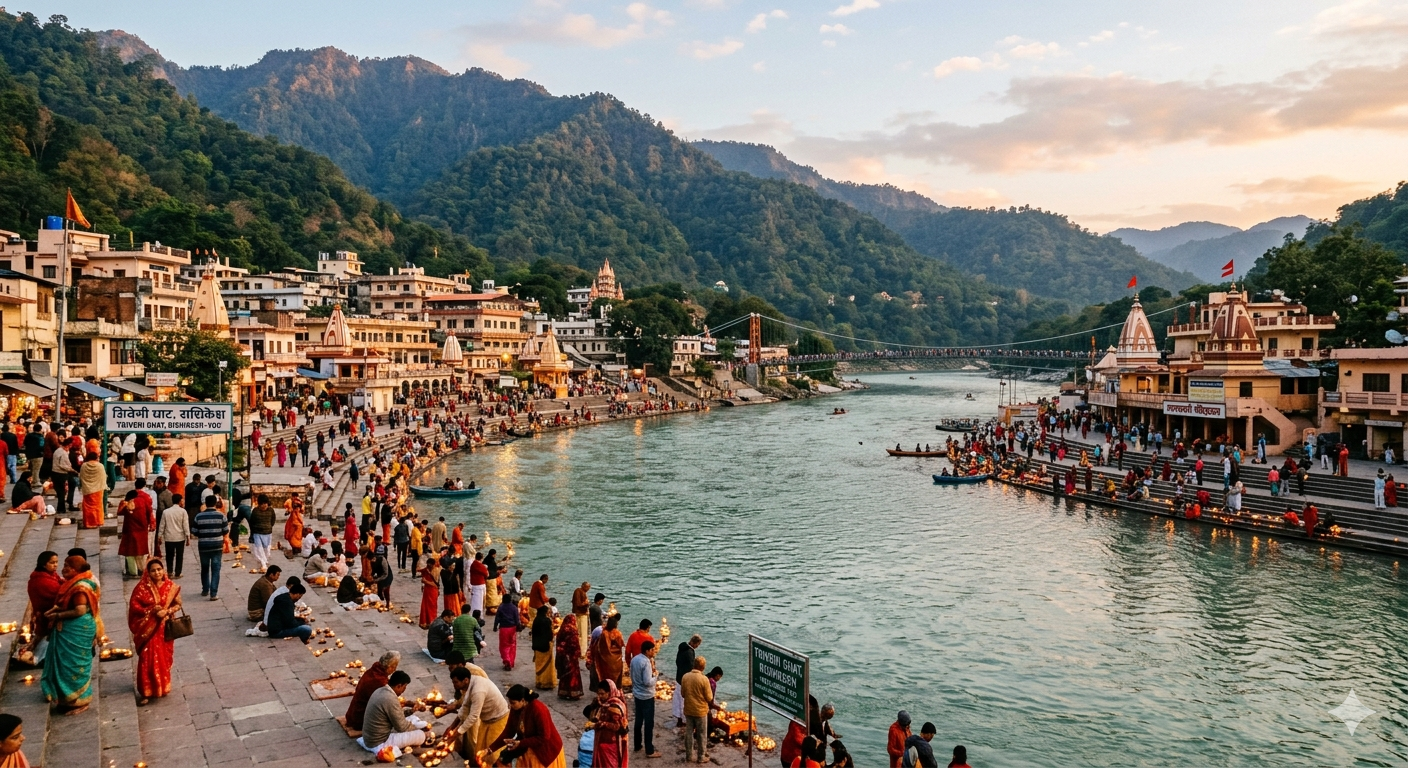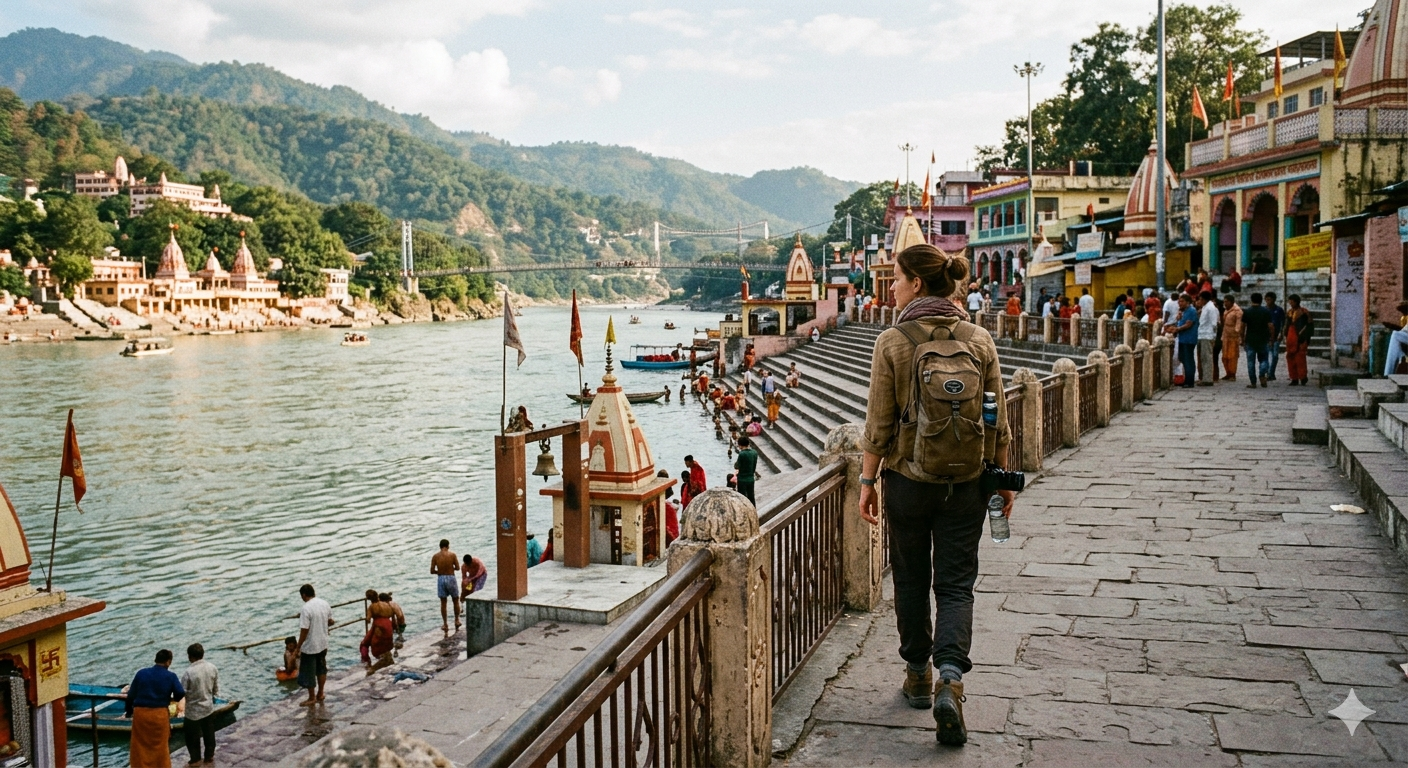
If you're considering going to Rishikesh alone, you've probably already searched some version of "is it safe to travel solo to Rishikesh." It's a fair question, and it deserves a straight answer rather than just blanket reassurance.
The Honest Safety Answer
Rishikesh is one of India's most consistently visited spiritual towns, with decades of experience hosting domestic and international travellers, including a large number who arrive alone. That long history of tourism generally translates into reasonable infrastructure, well-known ashrams, and a community used to solo visitors. As with any unfamiliar destination, ordinary precautions apply: arriving in daylight where possible, choosing an established stay rather than booking something unverified, and letting someone know your basic plans.
The biggest practical safety upgrade most solo travellers can make isn't about Rishikesh specifically — it's choosing a structured retreat over an entirely unplanned solo trip. A known organisation with an established track record removes most of the genuine uncertainty that comes with figuring everything out alone.
Why People Choose to Go Solo in the First Place
Nobody to Coordinate With
No negotiating schedules, interests, or pace with a travel companion.
Genuine Self-Reflection
Some questions are easier to sit with when there's no one familiar around to perform for.
A Clean Break
No reminders of home life, work, or routine pulling attention away from the experience.
Meeting New People on Your Own Terms
Solo travellers often end up more open to new connections than those arriving with a group.
What Solo Attendees Often Don't Expect
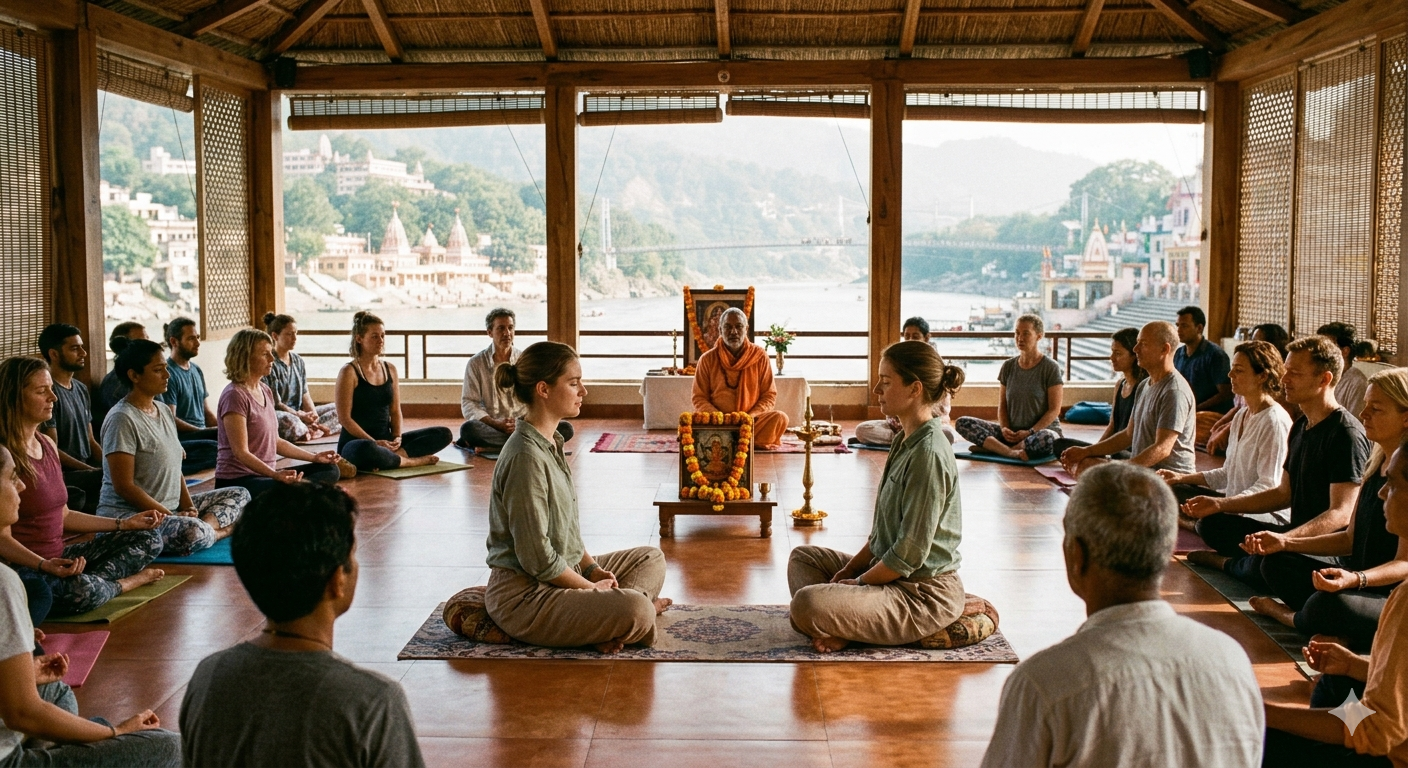
The most common surprise: loneliness rarely shows up the way people fear it will. Group retreats are structured around shared meals, sessions, and reflection time, which means solo attendees usually end up part of a community within a day or two, often forming closer connections than they would on a trip with people they already know.
Solo Trip vs. Structured Retreat
| Unplanned solo trip | Solo attendee at a structured retreat | |
|---|---|---|
| Logistics | Entirely on you to plan | Mostly handled in advance |
| Social connection | Depends on chance encounters | Built into the program by design |
| Guidance | Self-directed, no structure | Guided sessions and clear direction |
| Safety | Reasonable, with more uncertainty | Generally more predictable |
Joining a Community, Not Just a Trip
The Great Awakening's Rishikesh retreats regularly welcome solo travellers, many of whom arrive knowing no one and leave having formed genuine friendships within the community of nearly 5,000 members that founder Praveen Bhatiya and mentor Izumi Sammer have built since 2022. Coming alone is, if anything, one of the most common starting points.
If this will be your very first retreat of any kind, our broader beginner's guide to Rishikesh covers what to expect from day one, beyond just the solo travel angle.
Go Alone. Don't Stay Alone.
The Great Awakening's structured Rishikesh retreats give solo travellers guidance, community, and a clear path, right from arrival.
Frequently Asked Questions
Is Rishikesh safe for solo travellers, including women?
Rishikesh is one of India's more frequently visited and well-established spiritual towns, with a steady flow of solo travellers, and is generally considered reasonably safe, particularly when staying at a known ashram or joining a structured retreat rather than arranging accommodation informally.
Will I feel lonely attending a retreat alone?
Most group retreats are specifically designed so solo attendees quickly become part of a community, since shared meals, sessions, and reflection time naturally create connection with other participants.
Is it better to go solo or with a retreat group?
Travelling solo to the town and joining a structured retreat with a group is often the best of both worlds — you arrive independently, but you're not navigating the actual spiritual experience alone.