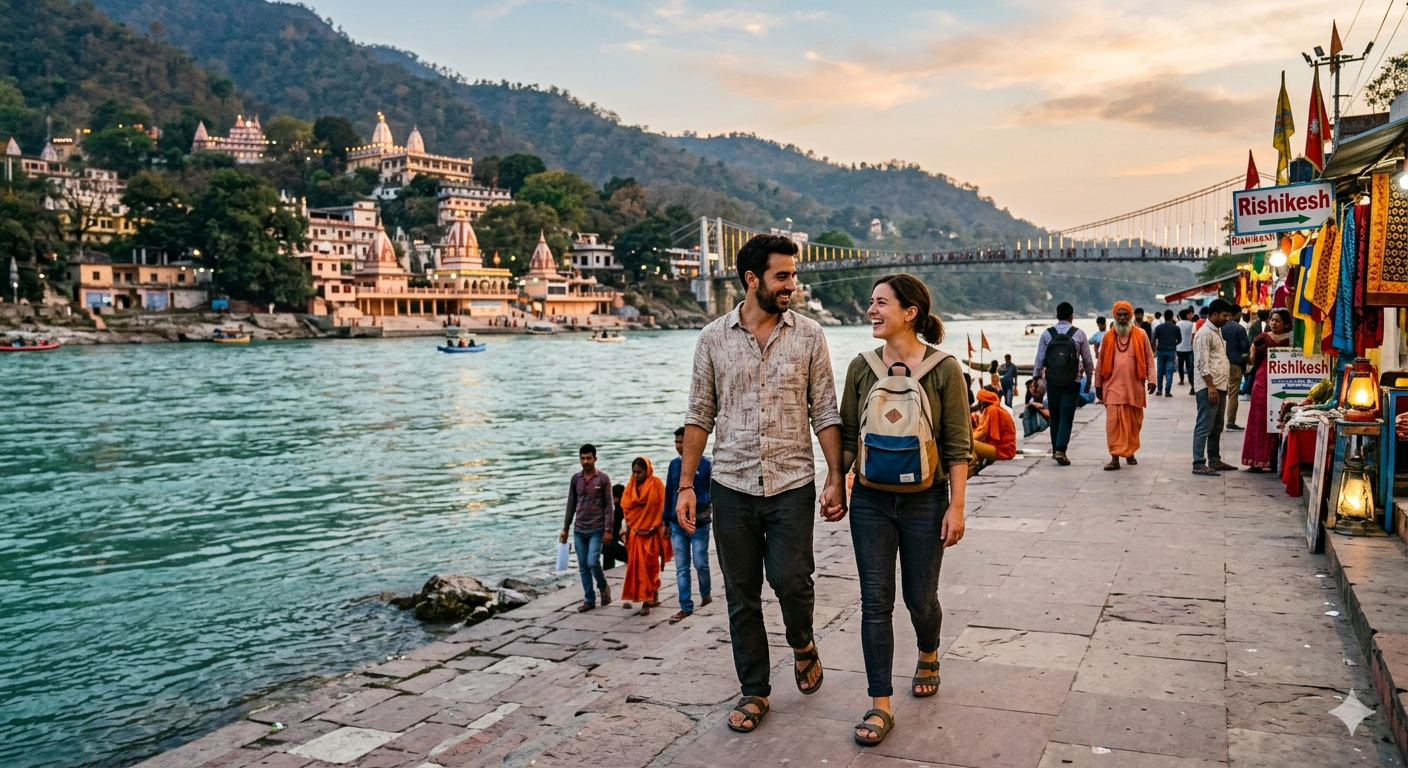
Most couple's trips are built around novelty — a new city, a nice hotel, good food. They're enjoyable, but they rarely change anything about how two people relate to each other. A spiritual retreat works differently, because it isn't designed around novelty at all. It's designed around honesty.
That's exactly why a growing number of couples are choosing Rishikesh over a typical romantic getaway — not instead of romance, but in addition to it, with something a little more lasting underneath.
Why Couples Choose This Over a Regular Vacation
Long-term relationships often run on autopilot. You're managing logistics, schedules, maybe kids or work stress, and the actual connection between two people quietly takes a back seat. A shared retreat interrupts that pattern, not by forcing conversation, but by creating space where it naturally happens — slow mornings, quiet evenings, no rush to be anywhere else.
Together and Separate, at the Same Time
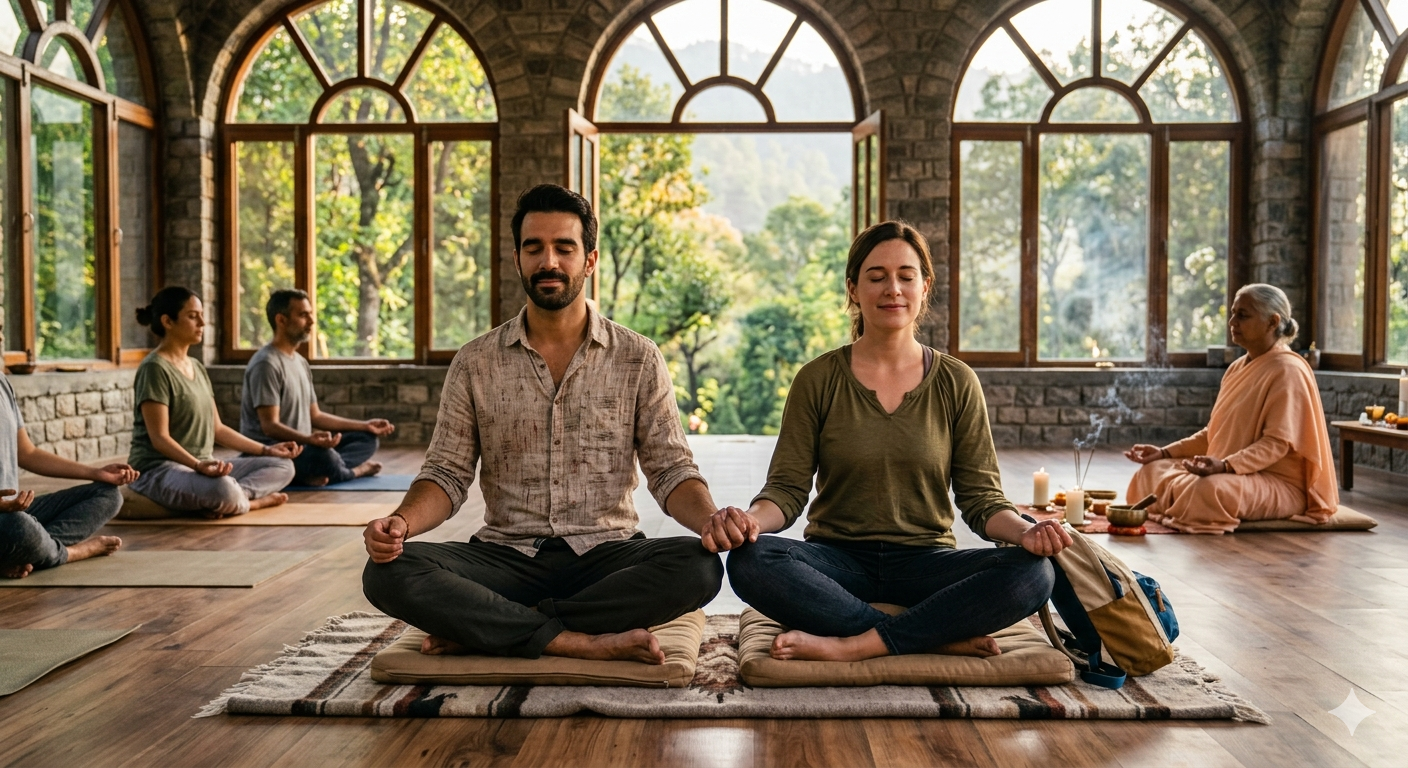
One thing that surprises a lot of couples: a good retreat balances shared experience with individual space. You attend group sessions together, but each person also gets time for their own reflection. That combination tends to matter more than people expect — growing alongside each other, rather than only ever growing as a unit.
Shared Practice
Group meditation and guided sessions experienced together, creating a common reference point afterward.
Individual Reflection
Time for each partner to process their own thoughts, without performing for the other.
Honest Conversation, Naturally
The slower pace tends to surface real conversations without either partner forcing them.
A Shared Language Afterward
Couples often come back with shared vocabulary and practices that make future conversations easier.
Is It Only for Couples in Trouble?
Not at all. Plenty of couples attend simply because they're doing fine and want to deepen what already works, not because something is broken. A retreat isn't a crisis intervention — it's an investment in a relationship that's worth investing in either way.
A Community Built on Shared Growth
The Great Awakening, founded by Praveen Bhatiya in 2022 under the guidance of his mentor Izumi Sammer, has welcomed many couples into its Rishikesh retreats over the years — some married for decades, others newer to a relationship and wanting to build something intentional from the start. The community of nearly 5,000 members spans every kind of relationship stage.
If you're attending as part of a couple but also want to understand the bigger picture of why people of every age are drawn here, our piece on why every generation comes to Rishikesh is a useful companion read.
Grow Together, Not Just Alongside Each Other
The Great Awakening's Rishikesh retreats welcome couples at every stage of their relationship, guided personally by Izumi Sammer.
Frequently Asked Questions
Do couples attend the same sessions during a spiritual retreat?
Most retreat programs include shared group sessions where couples participate together, alongside personal reflection time that each partner experiences individually.
Is a spiritual retreat a good idea for a relationship going through a rough patch?
A retreat isn't a substitute for couples counselling, but the shared practice of slowing down, reflecting honestly, and stepping away from daily friction can help couples reconnect and communicate more clearly.
Can unmarried couples attend a retreat together?
Yes, retreats are generally open to couples regardless of marital status, since the focus is on shared inner growth rather than relationship status.