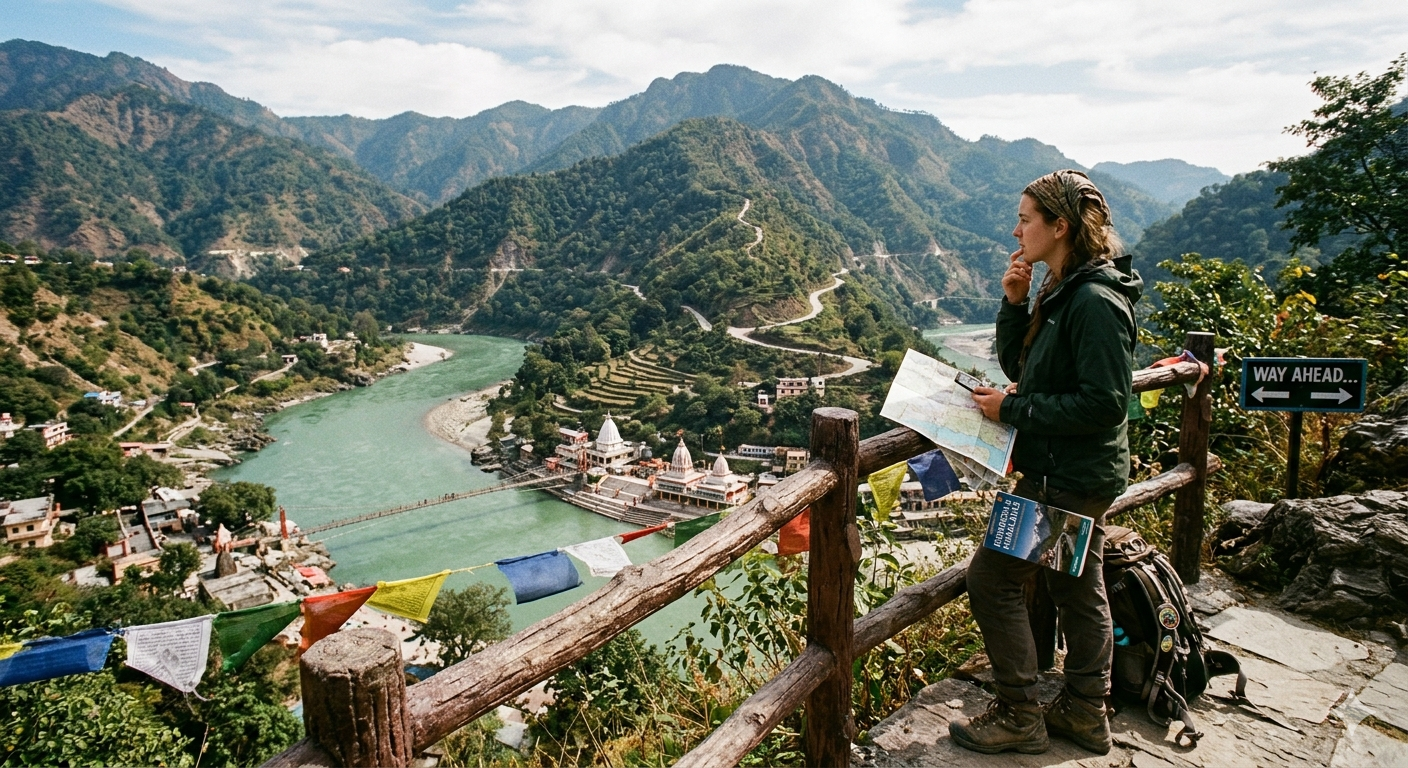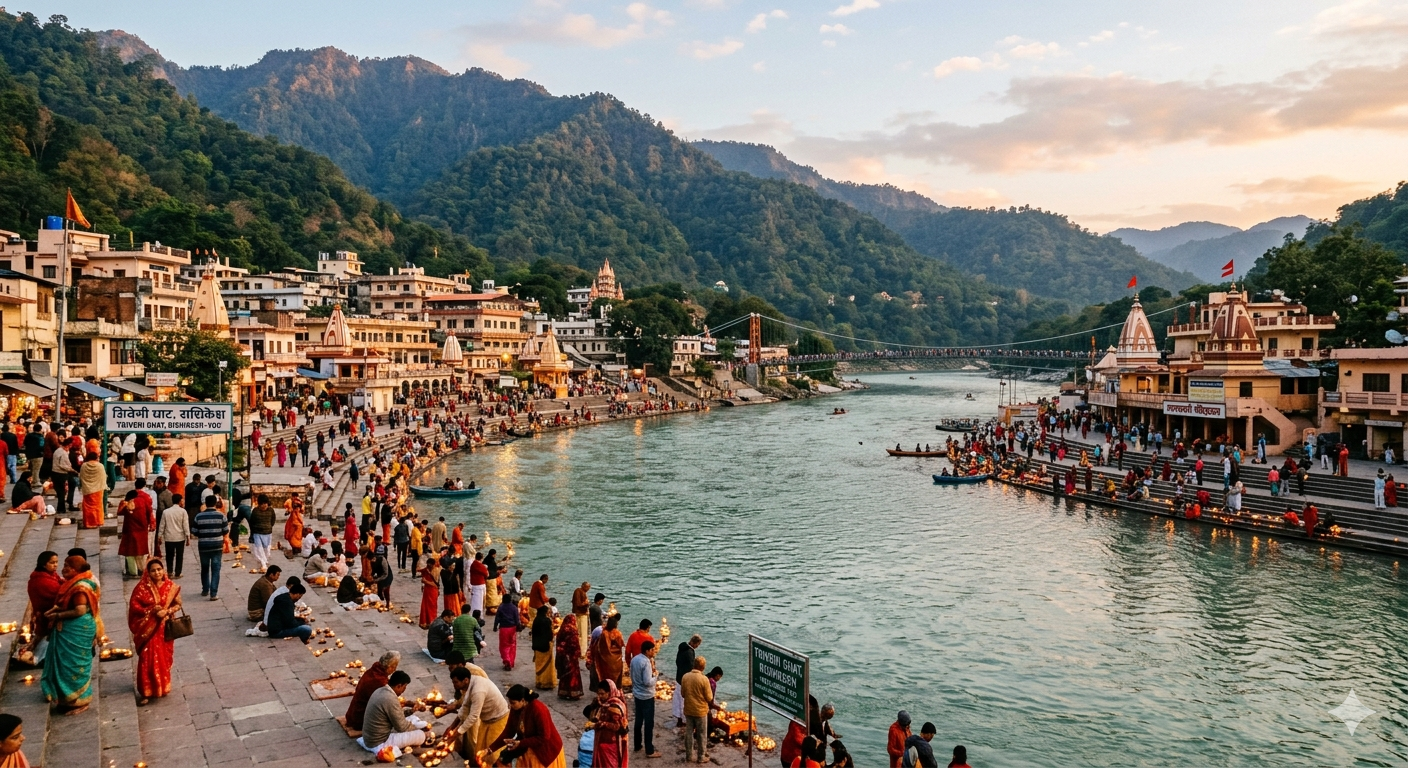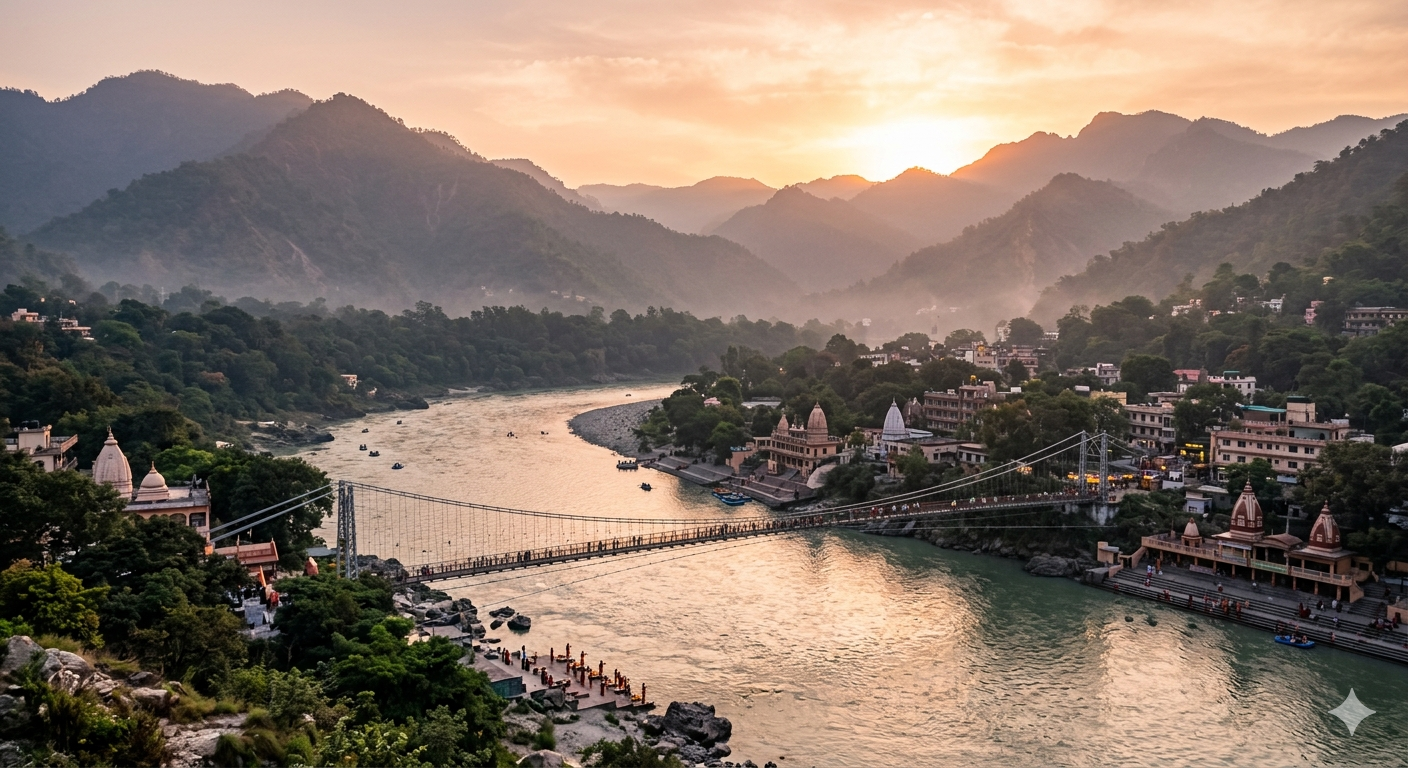
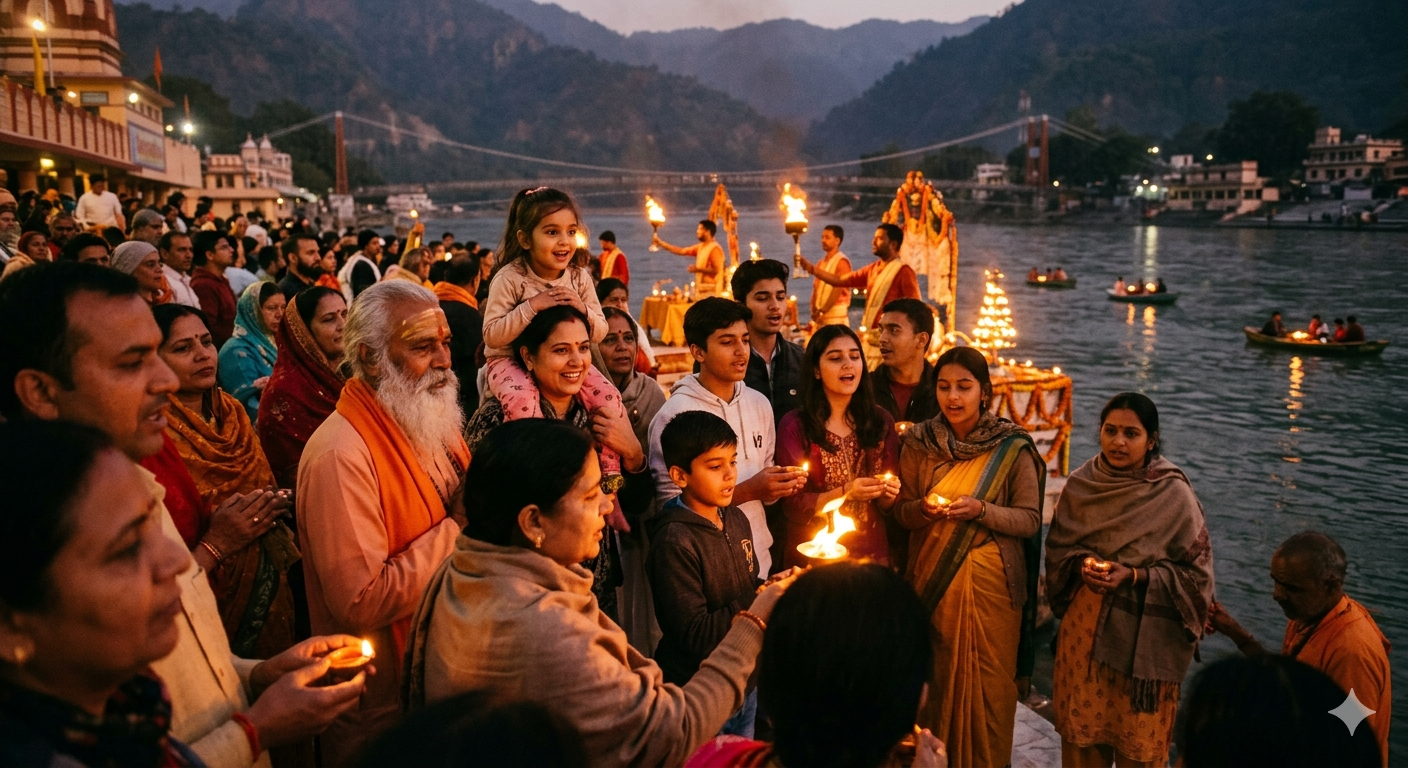
Something unusual is happening on the banks of the Ganga. A 22-year-old finishing college, a 35-year-old burnt out from back-to-back work calls, a 50-year-old who just became an empty nester, and a 68-year-old who has finally retired — all of them are showing up in Rishikesh, often within the same week, often at the same ashram gate.
On paper, that makes no sense. These are people at completely different points in life, with different problems, different bank balances, different ideas of a "good trip." And yet Rishikesh keeps pulling all of them in, year after year, in growing numbers.
The truth is that Rishikesh isn't one destination. It's many. What changes from generation to generation isn't the town — it's the question each visitor is quietly carrying when they arrive.
The Generational Shift Nobody Predicted
For decades, the popular image of a Rishikesh traveller was a backpacking foreigner in their twenties, here for a few weeks between yoga teacher training and the next stop on a gap year. That image is now badly out of date.
Recent travel industry data shows a dramatic shift: Gen Z now makes up the majority of all visitors to Rishikesh, with millennials close behind, and the two groups together account for almost the entire footfall at India's major spiritual destinations. Crucially, this isn't a foreign trend — it's overwhelmingly young Indians driving it, choosing temple towns and retreat centres over the nightlife circuit that once defined a "good holiday."
Something has changed in what people want from a trip, and from life. Every generation tends to define "the good life" differently. For one generation it was stability. For the next, it was experience — travel, achievement, optimisation. For the generation coming up now, it looks increasingly like alignment: does my outside life actually match what I believe on the inside?
That single question — am I aligned? — shows up differently depending on how old you are and what stage of life you're standing in. Which is exactly why Rishikesh has to be understood generation by generation, not as one single travel trend.
What Each Generation Is Actually Looking For
Gen Z (Late teens – mid 20s)
Identity, belonging, and a break from the performance of social media. Often their first real exposure to stillness. Drawn by community more than solitude.
Millennials (Late 20s – early 40s)
Burnout recovery. Career success that doesn't feel like enough. Looking to reconnect with a version of themselves that existed before deadlines took over.
40s – 50s Professionals
A quieter, more private kind of searching. Less interested in "finding themselves," more interested in finding meaning in what they've already built.
55+ & Retirees
Legacy, reflection, and unfinished spiritual questions that got postponed for forty years of responsibility. Time, finally, is no longer the obstacle.
None of these groups want the same retreat experience, even if they all want to feel calmer, clearer, and more themselves by the time they leave. A 22-year-old doesn't want to be handed the same slow, contemplative schedule a 60-year-old finds restorative. And a tired 45-year-old executive doesn't want to spend their five precious days off in an icebreaker circle designed for college students.
This is the part most generic articles on Rishikesh get wrong. They describe the town. They don't describe the person standing in it.
A Community Built Around This Exact Idea
The Great Awakening was founded on April 1, 2022 by Praveen Bhatiya, under the guidance of his spiritual mentor, Izumi Sammer. It began as a small Telegram group of just ten people, united by curiosity about consciousness, meditation, and what it actually means to live an awakened life.
Four years on, that small group has grown into a community of nearly 5,000 members across more than fifteen countries. What hasn't changed is the founding belief: that spiritual growth isn't a one-size-fits-all path. People arrive at TGA's Rishikesh retreats at every possible life stage — students taking their first real break from screens, mid-career professionals quietly unravelling under pressure, retirees finally giving themselves permission to ask the bigger questions. Each one is met differently, because each one is carrying something different.
That is the real reason this matters for you: it's not about whether Rishikesh "works." It clearly does, for almost everyone who goes with sincerity. The real question is which version of the Rishikesh experience actually fits where you are in your life right now.
How To Find Your Own Entry Point
If you're trying to decide whether — and how — Rishikesh fits into your life, it helps to be honest about which of these you're really chasing:
| If you're feeling... | You're probably looking for... |
|---|---|
| Lost, anxious about the future, comparing yourself constantly online | Community, identity, a sense of belonging beyond your phone |
| Successful but exhausted, achieving but empty | Genuine rest, reconnection with who you were before work consumed you |
| Stable but unfulfilled, going through the motions | Deeper meaning, a sense of purpose beyond routine |
| Reflective, with more time now than ever before | Legacy, closure, and answers to questions you postponed for decades |
The One Thing That Doesn't Change
Whichever generation you belong to, whichever question you're carrying, the mechanics of why Rishikesh works tend to be the same. The Ganga has a way of slowing down a racing mind simply by being near it. The Himalayan foothills put your problems back into proportion without anyone needing to say a word. And a structured retreat — rather than an unplanned solo trip — gives that natural stillness a direction to move in, instead of just a few pleasant days that fade once you're back home.
That last part is where most people get stuck. They visit, they feel something shift, and then three weeks later, back in traffic and inboxes, it's gone. A guided retreat exists precisely to prevent that — to turn a fleeting feeling of peace into a practice you can actually keep.
Find the Retreat Built for Your Life Stage
The Great Awakening runs spiritual retreats in Rishikesh designed around real transformation, not just a few quiet days by the river. Guided personally by Izumi Sammer, with nearly 5,000 members worldwide already on this path.
Frequently Asked Questions
Why is Rishikesh popular with so many different age groups?
Rishikesh sits at a rare intersection of ancient spiritual tradition, natural beauty, and modern retreat infrastructure. A 22-year-old looking for meaning and a 55-year-old looking for peace can both find what they came for, just through different doors — one through community and self-discovery, the other through stillness and reflection.
Is Rishikesh only for people who are already spiritual?
No. Most first-time visitors, including those who join The Great Awakening's retreats, have never meditated seriously before. Rishikesh works as an entry point precisely because the environment itself does much of the work before any formal practice even begins.
What is the real reason Gen Z is choosing Rishikesh over party destinations?
It reflects a broader generational pattern. Where earlier generations defined a good life through stability or experience, many young people today are searching for alignment between how they live and what they actually believe — and Rishikesh offers a tangible place to explore that.
How is a spiritual retreat in Rishikesh different from a yoga holiday?
A yoga holiday is usually built around physical practice and relaxation. A spiritual retreat is built around inner work — meditation, self-inquiry, and guided consciousness practices — aimed at lasting change rather than a few days of rest.